The bagged vs bagless vacuum cleaners decision matters more than most buying guides make it sound — it affects your allergy exposure, your ongoing costs, and how much maintenance the vacuum actually needs. There’s no universally “better” option; the right choice depends on what you’re optimizing for.
Bagged vs Bagless Vacuum Cleaners: The Core Trade-Off
Bagged vacuums seal dust and allergens inside a disposable bag that you throw away sealed, which means less airborne dust when you empty it. Bagless vacuums use a reusable canister you empty directly into the trash, which is cheaper over time but exposes you to a cloud of fine dust at the moment of emptying — a real consideration if you have allergies or asthma.
| Factor | Bagged | Bagless |
|---|---|---|
| Allergy/dust exposure when emptying | Lower — bag is sealed and discarded whole | Higher — dust cloud when emptying the canister |
| Ongoing cost | Recurring bag purchases ($15-30 for a pack) | None beyond the vacuum itself |
| Suction consistency | Drops gradually as the bag fills | Stays more consistent, but filters need regular cleaning |
| Maintenance | Just replace the bag when full | Regular filter washing/replacement required |
| Capacity | Generally larger before needing emptying | Smaller canisters mean more frequent emptying |
Choose bagged if:
- Anyone in the household has allergies, asthma, or is otherwise sensitive to airborne dust
- You’d rather pay a small recurring cost than deal with more frequent maintenance
- You want more consistent capacity before needing to empty it
Choose bagless if:
- You want to avoid the ongoing cost and hassle of buying bags
- You’re comfortable emptying the canister outdoors or hyper carefully to minimize dust exposure
- You’re willing to clean or replace filters on a regular schedule — skipping this is the main reason bagless vacuums lose suction over time
A note on filtration either way
The bag-vs-bagless choice matters less for allergy control than whether the vacuum has sealed HEPA filtration — a bagged vacuum without sealed filtration can still leak allergens through gaps in the housing, and a bagless vacuum with true sealed HEPA can control dust release reasonably well despite the exposed-canister design. If allergies are your main driver, prioritize checking for “sealed HEPA” specifically over the bagged/bagless question.
Related reading
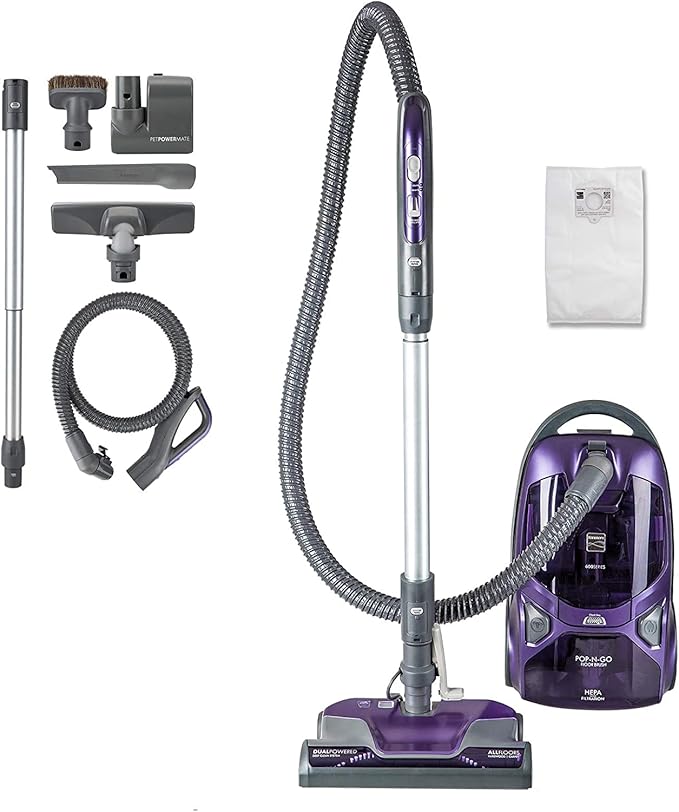
For specific model recommendations, see our best canister vacuum roundup (mostly bagged) and upright vacuum guide (mix of both types). If pet hair and allergens are your main concern, our best vacuums for pet hair guide covers filtration in more depth.
Bagged vs Bagless Vacuum Cleaners: Real-World Cost Over 5 Years
When you run the numbers on bagged vs bagless vacuum cleaners over several years of ownership, the gap is smaller than it first appears. A typical household buys 8-12 bags a year at $15-30 per pack, which adds up to roughly $60-120 annually — noticeable, but rarely the deciding factor on its own. Bagless owners avoid that recurring cost but usually replace filters more often than they expect, since a clogged or worn filter is the single biggest cause of a bagless vacuum losing suction. According to the EPA’s guidance on HEPA filtration, filter maintenance matters more for indoor air quality than the bag-vs-bagless format itself, which lines up with what most manufacturers recommend in their care instructions — see, for example, Miele’s bagged vacuum lineup for how sealed-bag systems are engineered around allergen containment.
The bottom line on bagged vs bagless vacuum cleaners: budget-conscious buyers without allergy concerns usually save more by going bagless and staying disciplined about filter cleaning, while households managing asthma or severe allergies often find the small recurring bag cost worth the reduced dust exposure at emptying time.
FAQs
Do bagless vacuums lose suction faster than bagged ones?
Not inherently — but bagless vacuums are more sensitive to filter maintenance, and a neglected filter causes a much sharper suction drop than a partially full bag does.
Are bagged vacuums being discontinued?
No. Bagged models remain common, particularly in canister and commercial vacuums, precisely because of the allergy and capacity advantages above.
Which is better for pet hair specifically?
Neither format inherently handles pet hair better — that comes down to brushroll design and suction power. See our pet hair vacuum guide for model-specific recommendations.